LOLU™ Health · Holistic Nutrition Training Program

Understand what food
does inside your body.

Phase I · Foundations of Holistic Nutrition

Why can the same diet affect people differently? How do nutrients, hormones and metabolism work together? Learn the science that makes nutrition advice easier to evaluate—and everyday food choices easier to understand.

Across 12 connected modules, build your understanding from digestion and nutrient functions to body weight, eating behaviours, physical activity and nutrition through life. Develop the reasoning to ask better questions and make informed nutrition decisions.

View Module 01 for pricing and purchase details.

12 connected modulesEvidence-based nutrition sciencePractical questions. Scientific understanding.

A connected approach to nutrition

Understand how nutrition works.

Food choices make more sense when you understand what happens inside the body. Phase I connects digestive health, nutrient functions and metabolic pathways with the practical questions people ask about diet and health.

Here, a holistic perspective brings physiology, behaviour, activity and life stage into the same framework. The curriculum progresses from core principles to integrated applications, providing a foundation for more detailed nutrition study.

Modules 01–02

Establish the foundations

Understand nutrition principles, digestion and how dietary patterns meet individual needs.

Modules 03–08

Connect nutrients and metabolism

Explore macronutrients, micronutrients and the pathways that turn food into cellular energy.

Modules 09–12

Apply the science

Examine body weight, eating behaviours, physical activity and nutrition through the life cycle.

The Phase I curriculum

12 modules. One scientific foundation.

Follow the progression below, or open a module’s full course page to explore its details.

01 / Nutrition foundationsModules 01–02
Module 01: Introduction to Nutrition and Digestive Health — English course overview
View full-size Module 01 image (opens in a new tab)

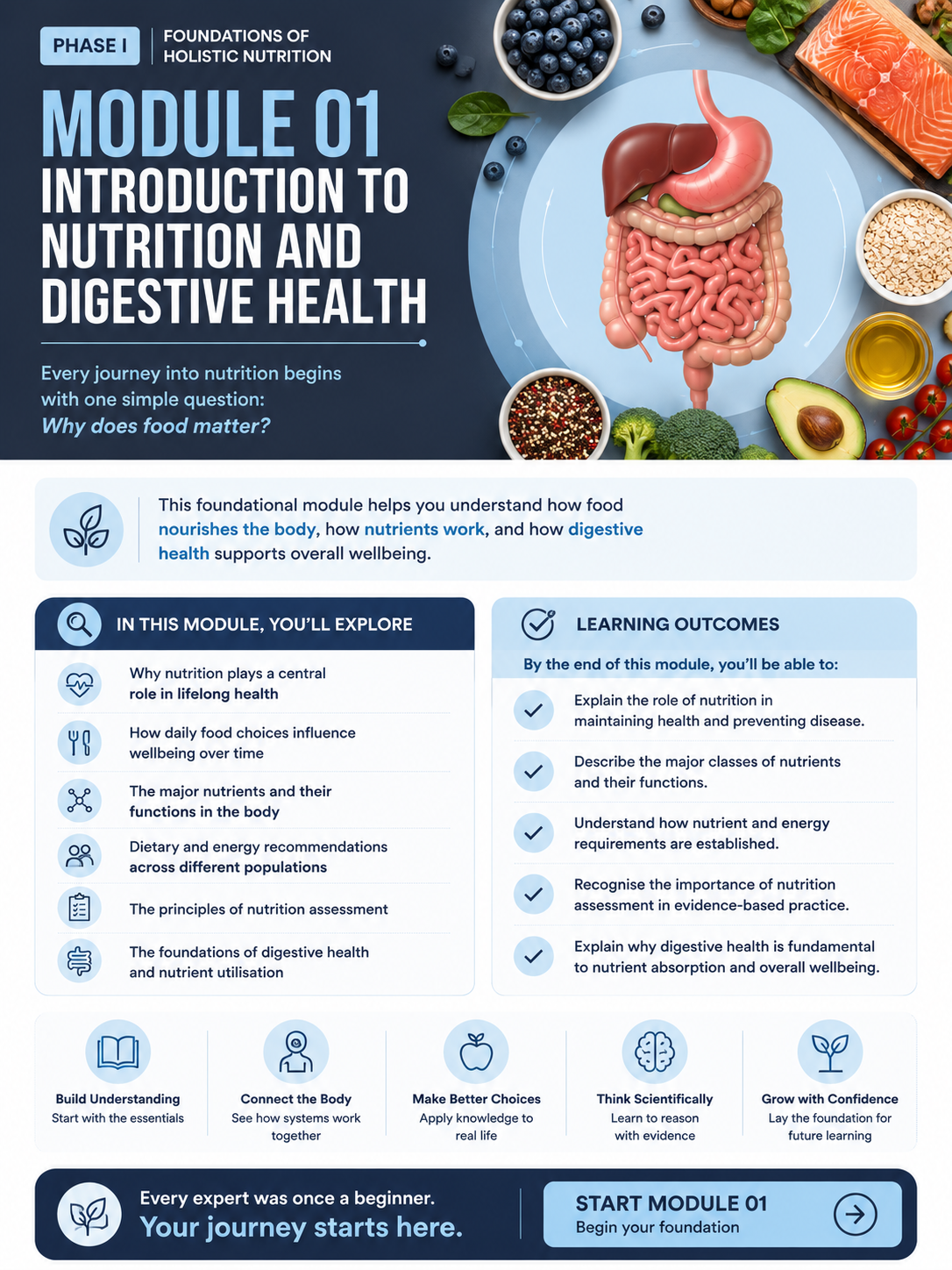
Module 01

Introduction to Nutrition and Digestive Health

You eat every day. Do you understand what happens to food inside your body?

What should you have for breakfast? How should you balance lunch? Should dinner be smaller? Food decisions are part of daily life, yet explaining why a food matters—or where its nutrients go—often means relying on familiar advice. This module starts with those fundamental questions and builds the framework for understanding nutrition.

Explore the types and functions of nutrients, how food supports growth, tissue repair and energy production, and why energy needs and nutrient recommendations must be understood in an individual context. An introduction to nutrition assessment helps you identify what information matters when discussing someone’s diet.

Digestive health provides another thread through the module. Connect eating with the processes of digestion, establishing the foundation for later study of nutrient absorption and utilisation. Begin to understand food choices through biological processes and mechanisms.

If you want to study nutrition systematically or discuss your family’s food choices more clearly, this is the starting point. These concepts return throughout the modules on carbohydrates, fats, proteins and metabolism, giving each new topic a place within a connected framework.
  • Nutrient functions
  • Individual requirements
  • Digestive health
Explore Module 01
Module 02: We Are What We Eat: Designing a Holistic Nutritional Diet — English course overview
View full-size Module 02 image (opens in a new tab)

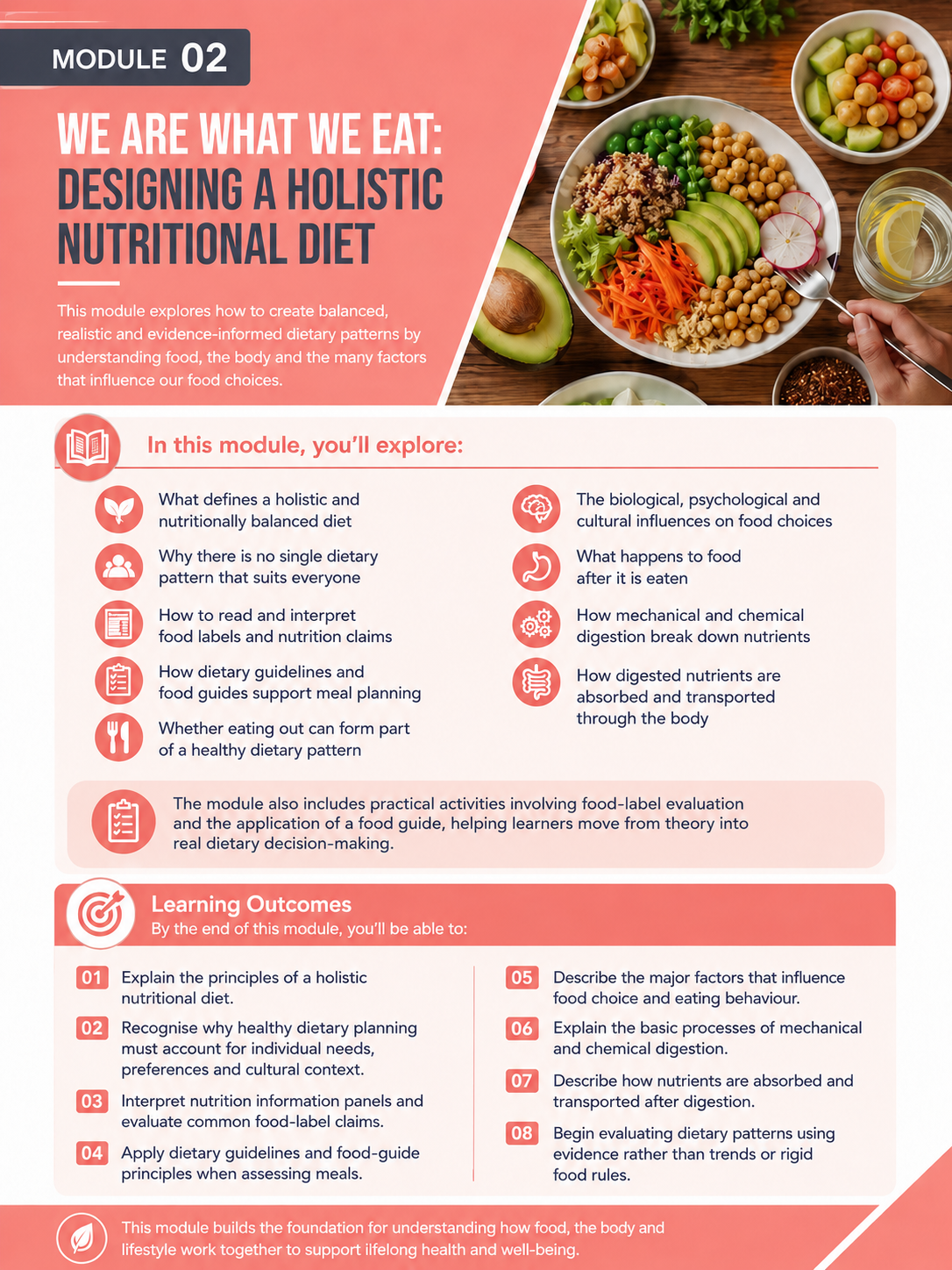
Module 02

We Are What We Eat: Designing a Holistic Nutritional Diet

How do you decide whether a meal suits your needs?

At the supermarket, “high protein”, “low fat” and “no added ingredients” compete for your attention. At home, meals must accommodate children, a partner or older relatives. A popular eating pattern may sound convincing, but how do you judge whether it fits your household? Useful nutrition knowledge needs to address these everyday decisions.

Examine how age, physiology, physical activity, cultural habits and health influence nutritional needs. Learn to assess dietary patterns and use dietary guidelines and principles of nutritional balance to analyse meals in an individual context.

The module also connects food labels with human physiology. Explore how to interpret nutritional information and follow nutrients through digestion, absorption and transport. Bring together what a food contains, how much is eaten and how the body obtains and uses its nutrients.

Build a stronger basis for comparing foods, assessing meal composition and explaining why dietary needs differ. Whether you are planning everyday meals or continuing to study individual nutrients, this framework supports more informed analysis.

  • Dietary patterns
  • Food labels
  • Nutrient absorption
Explore Module 02
02 / Nutrients and metabolismModules 03–08
Module 03: Carbohydrates: Plant-Derived Energy Nutrients — English course overview
View full-size Module 03 image (opens in a new tab)

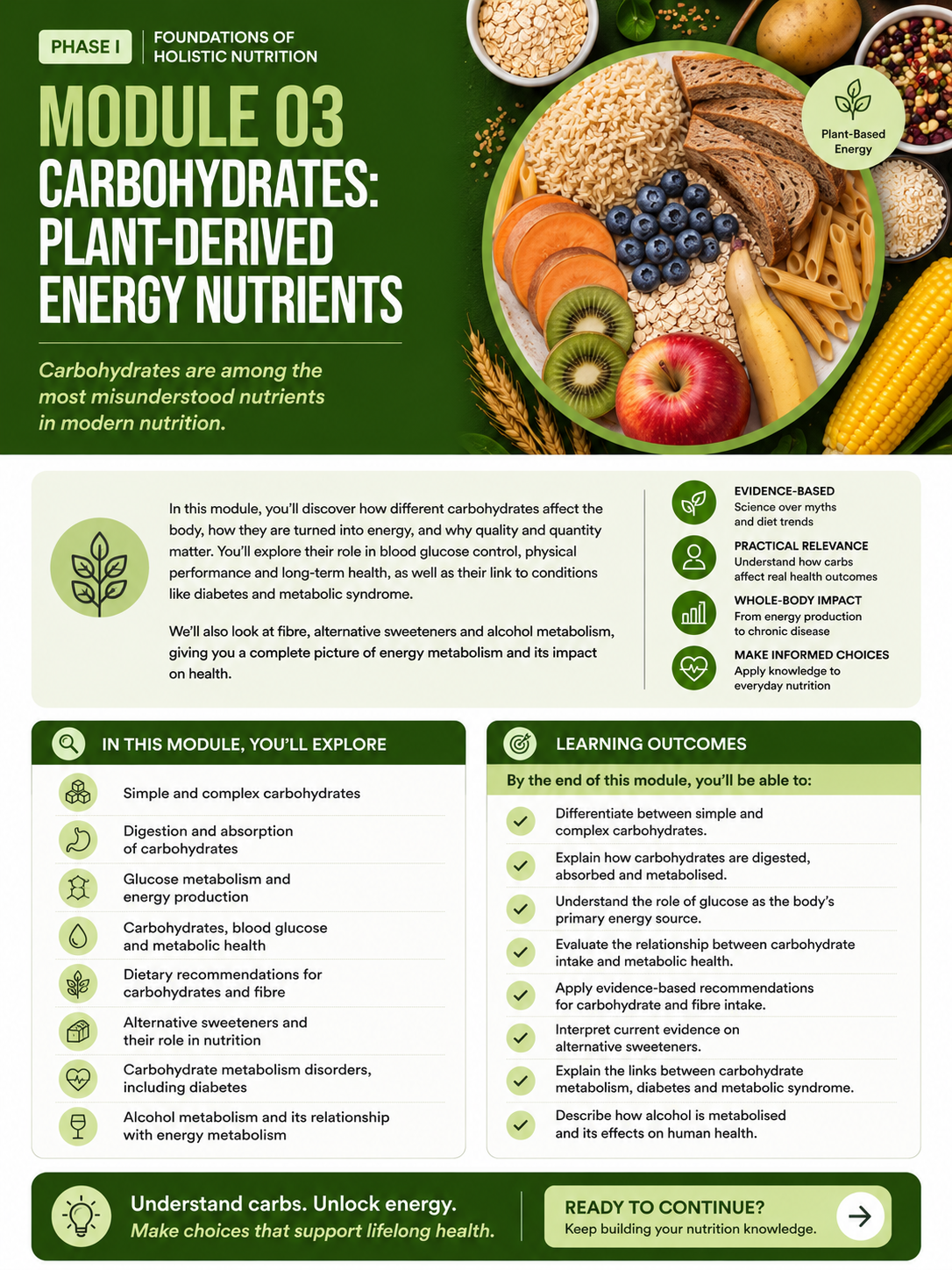
Module 03

Carbohydrates: Plant-Derived Energy Nutrients

Rice, fruit and “sugar-free” foods: how should you assess the advice?

One person recommends cutting out staple carbohydrates; another warns against fruit because it contains sugar. Meanwhile, “sugar-free” labels can make a product seem straightforward to choose. When you are thinking about body weight, blood glucose or exercise nutrition, conflicting messages can make a simple meal difficult to navigate.

Begin with the different types of carbohydrate and follow their digestion, absorption and utilisation. Explore how their sources and forms relate to blood glucose, physical performance and metabolic health. Learn to clarify which carbohydrate is being discussed before evaluating a claim.

Examine dietary fibre, alternative sweeteners and scientific evidence concerning diabetes and metabolic syndrome. The module also introduces alcohol metabolism and its relationship with energy metabolism, bringing these topics into a coherent physiological framework.

If the question “Should I eat carbohydrates?” has repeatedly changed your food choices, this module offers a more structured way to think. When assessing a breakfast, a food label or advice about blood glucose, you will have a clearer sense of the information to ask for and the evidence to examine.

  • Blood glucose
  • Fibre and sweeteners
  • Alcohol metabolism
Explore Module 03
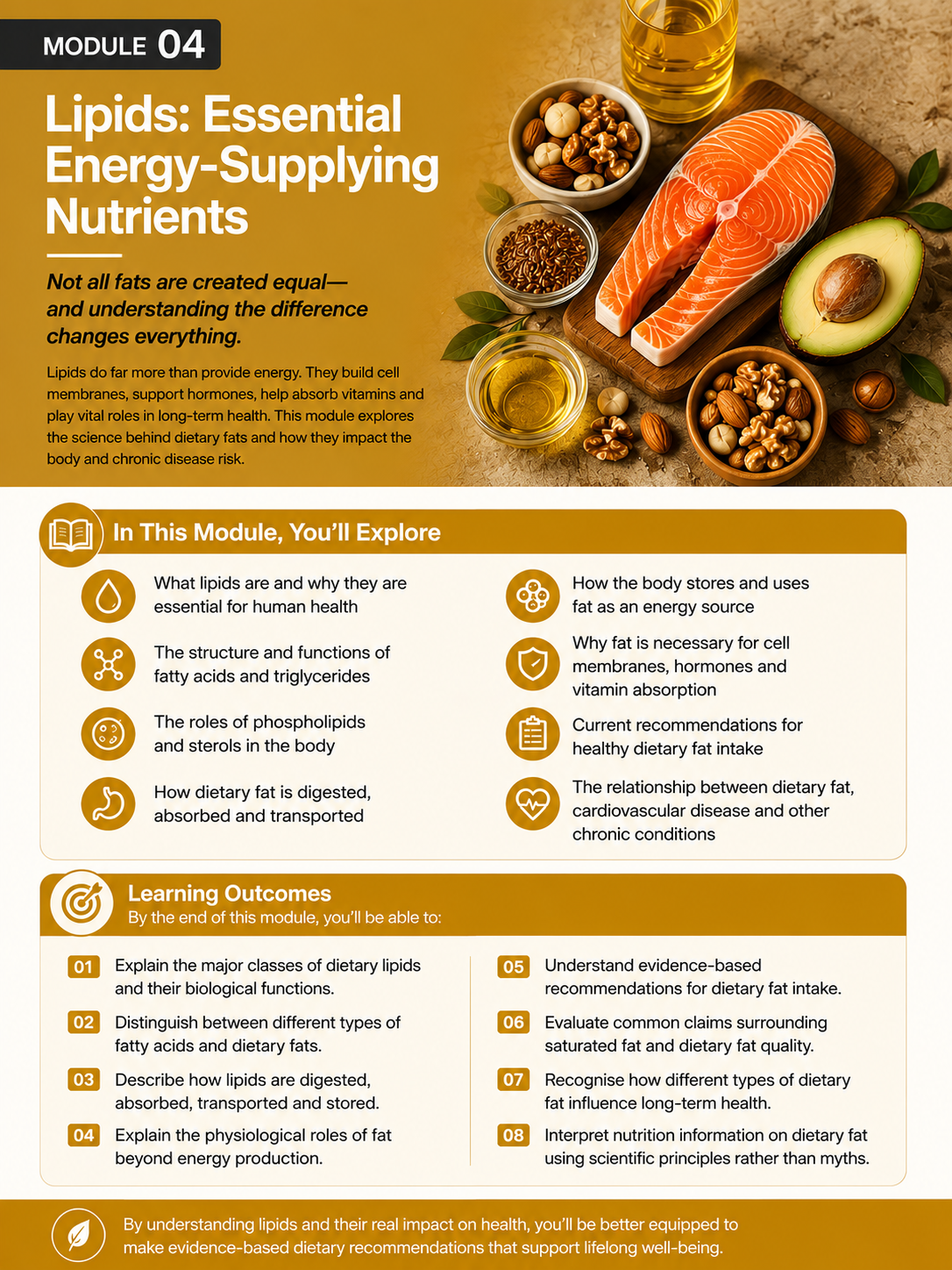
Module 04: Lipids: Essential Energy-Supplying Nutrients — English course overview
View full-size Module 04 image (opens in a new tab)

Module 04

Lipids: Essential Energy-Supplying Nutrients

What guides your choice of cooking oil or a low-fat product?

Olive oil, butter and other cooking oils offer plenty of choices, while “low fat” can become the main criterion when buying dairy products. High-fat diet messages add another layer of uncertainty. Understanding these recommendations begins with the structure, functions and metabolism of lipids.

Explore triglycerides, phospholipids and sterols, distinguish saturated from unsaturated fats, and follow lipids through digestion, absorption, transport and storage. Connect their energy value with their biological roles to make dietary fat a process you can analyse.

Examine the relationships between lipids, cell membranes, hormone synthesis and fat-soluble vitamin absorption. Learn to evaluate claims about dietary fat and health through scientific evidence, considering the type of lipid, the dietary context and the health question being discussed.

Develop a clearer basis for comparing fat sources, reading nutritional information and assessing statements such as “this oil is best” or “less fat is always better”. This module supplies essential concepts for connecting food choices with physiology.

  • Lipid structure
  • Fat transport
  • Dietary fat evidence
Explore Module 04
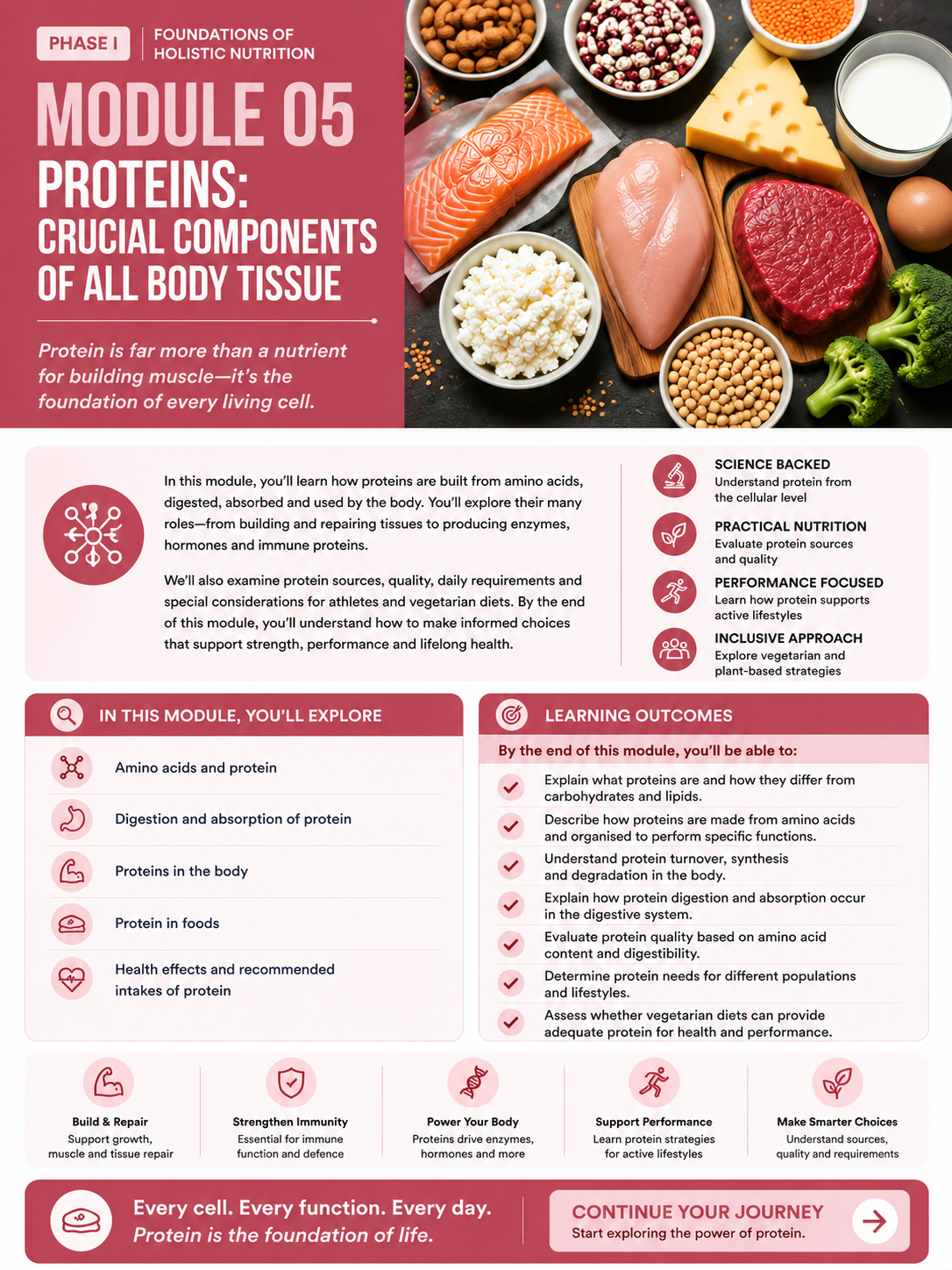
Module 05: Proteins: Crucial Components of All Body Tissue — English course overview
View full-size Module 05 image (opens in a new tab)

Module 05

Proteins: Crucial Components of All Body Tissue

Protein shakes for exercise, extra protein for vegetarians—how do you evaluate the advice?

Perhaps you are increasing your exercise, eating less meat or planning meals for an older relative. Questions about protein requirements, plant sources and protein powders often arrive together. Making sense of them requires looking at individual needs, food sources and how protein is used in the body.

Learn how amino acids form proteins and how proteins are digested and absorbed. Explore protein quality through amino acid composition and digestibility, and examine protein’s roles in tissues, enzymes, hormones and immunity.

Consider daily protein requirements, protein-rich foods and well-planned vegetarian diets. Identify the factors that matter when evaluating plant and animal sources, placing the grams of protein on a label within the context of overall intake and individual needs.

Build the knowledge to analyse protein sources across a day’s meals, compare products and ask whether a recommendation explains its intended audience and assumptions. These questions are directly relevant to exercise, vegetarian eating and family meal planning.

  • Amino acids
  • Protein quality
  • Vegetarian nutrition
Explore Module 05
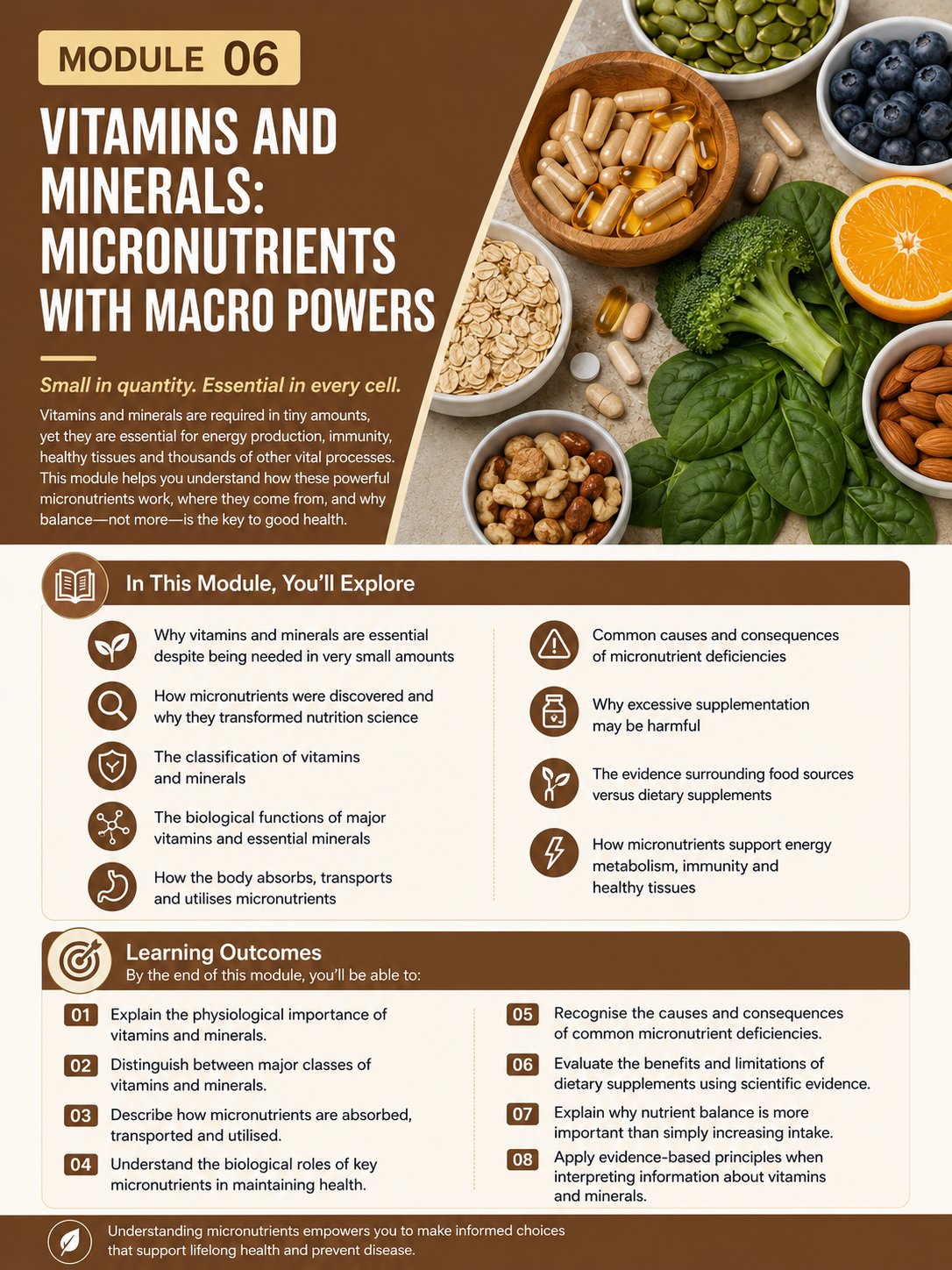
Module 06: Vitamins and Minerals: Micronutrients with Macro Powers — English course overview
View full-size Module 06 image (opens in a new tab)

Module 06

Vitamins and Minerals: Micronutrients with Macro Powers

As your supplement collection grows, do you know what you are adding?

Shelves of vitamins, minerals and combination products promise different benefits. After reading recommendations, you may consider several at once without knowing what your diet already provides, where products overlap or why supplementation is being suggested. This module establishes the concepts needed to assess those questions.

Explore the discovery, classification and food sources of vitamins and minerals, and learn how the body absorbs, stores and uses them. Study their interactions to understand how micronutrients function together within the body.

Examine how deficiencies develop, how food and supplement sources differ, and the issues surrounding excessive intake. Learn to consider nutritional needs, sources and amounts when thinking about balance and evaluating product information.

If you want to understand supplement labels, organise nutrition information for your household or ask more precise questions of a health professional, this module provides a useful foundation. It also prepares you to study micronutrients in energy metabolism.

  • Vitamin and mineral roles
  • Nutrient interactions
  • Deficiency and excess
Explore Module 06
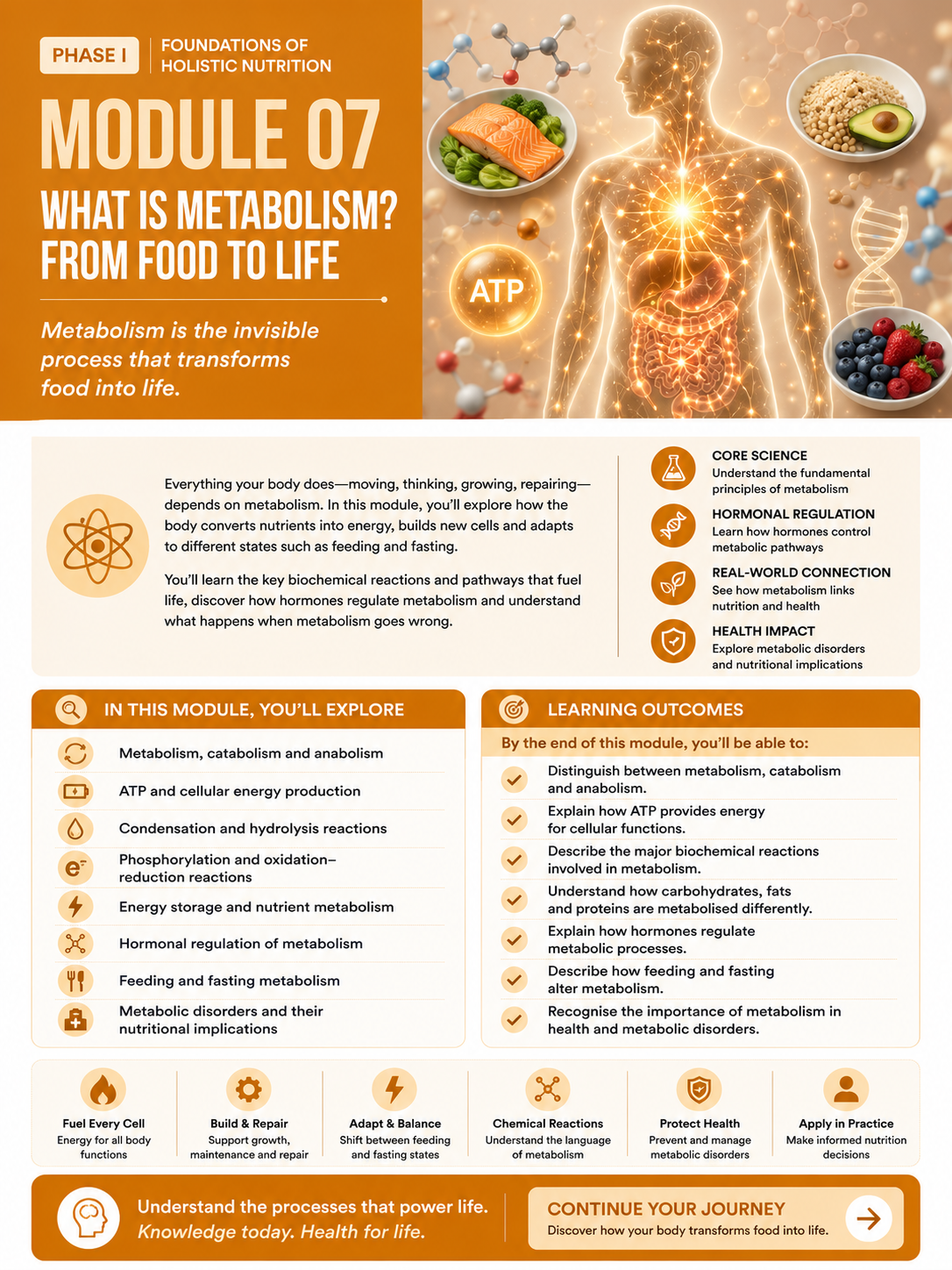
Module 07: What Is Metabolism? From Food to Life — English course overview
View full-size Module 07 image (opens in a new tab)

Module 07

What Is Metabolism? From Food to Life

What does “metabolism” mean—and how does it change between eating and fasting?

A friend describes having a “slow metabolism”, an advertisement promises to “boost” it, and weight-loss discussions often use the word to mean calorie-burning speed. But which processes does metabolism include? How does the body organise nutrient use after a meal compared with an unfed state?

Explore metabolic pathways and the connections between nutrient breakdown, energy release and tissue synthesis. Beginning with a real-life metabolic disorder, the module illustrates why these pathways matter and how they relate to health.

Learn how ATP—adenosine triphosphate—supports cellular activity and how hormones coordinate metabolism during feeding and fasting. Your earlier study of carbohydrates, fats and proteins begins to come together within one physiological framework.

This module connects the foundations with later questions about blood glucose, body weight and energy use. Develop a more precise understanding of “metabolism” and learn to recognise whether a nutrition claim explains the processes and conditions it refers to.

  • ATP and cellular energy
  • Hormonal regulation
  • Feeding and fasting
Explore Module 07
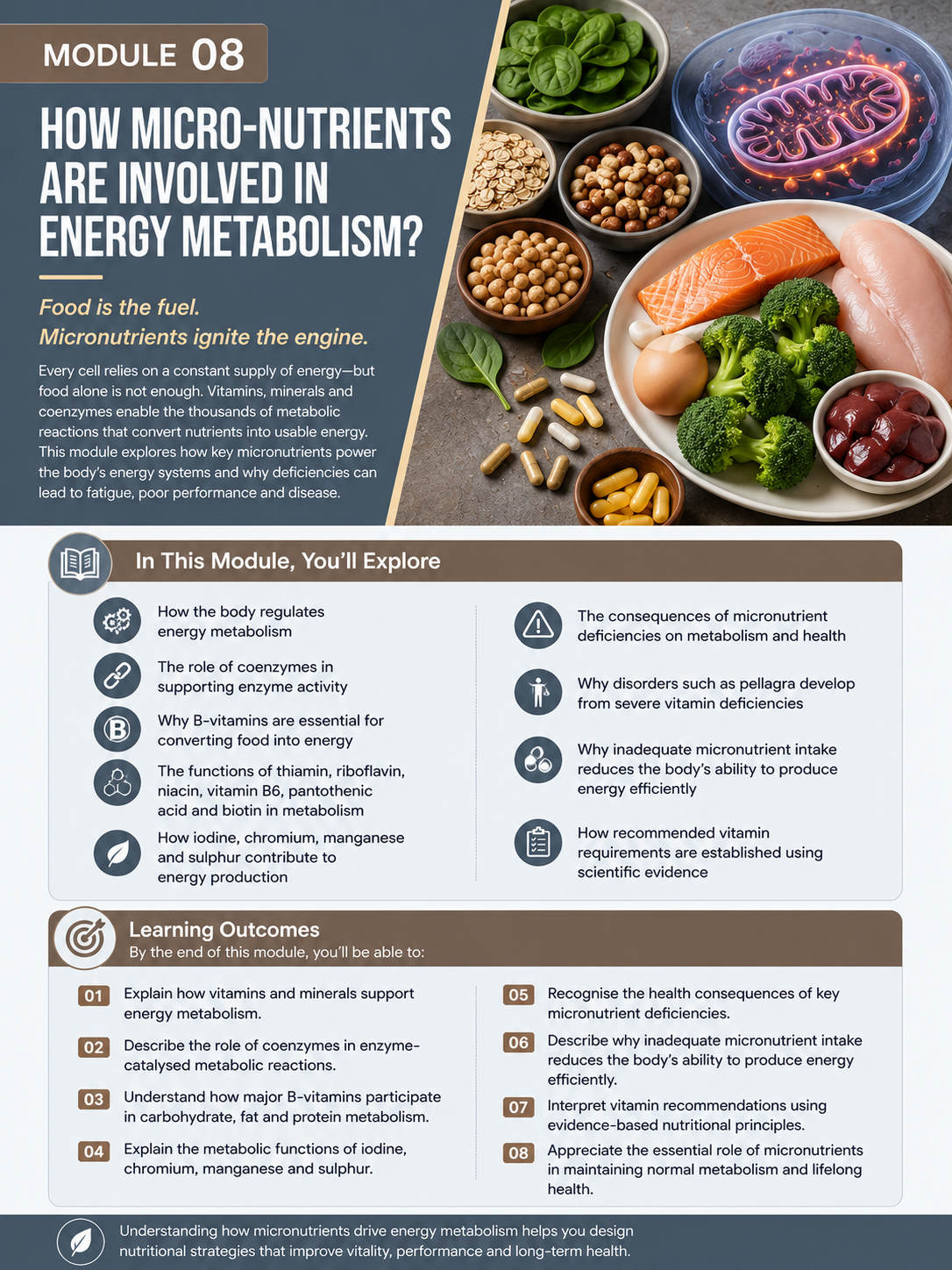
Module 08: How Micronutrients Drive Energy Metabolism — English course overview
View full-size Module 08 image (opens in a new tab)

Module 08

How Micronutrients Drive Energy Metabolism

What actually happens between eating food and producing cellular energy?

When a product says it “supports energy metabolism”, what process is it describing? B-vitamins, minerals and supplements often appear in discussions of fatigue. Understanding that information requires distinguishing a nutrient’s metabolic role from a particular person’s nutritional circumstances.

Connect the nutrients in food with cellular energy production. Explore how B-vitamins, minerals and coenzymes participate in metabolic reactions, using enzymes and pathways to understand why these nutrients feature in discussions of energy metabolism.

Examine how micronutrients work together and how deficiencies can affect energy production and physical function. Building on the previous module, develop an understanding of the integrated system and the relationships between its components.

Learn to read energy-metabolism descriptions more critically, distinguish explanations of biological function from individual supplementation needs, and identify questions that require further information. This module helps bring micronutrient knowledge into a connected understanding of metabolism.

  • B-vitamins
  • Coenzymes and minerals
  • Integrated metabolism
Explore Module 08
03 / Nutrition in contextModules 09–12
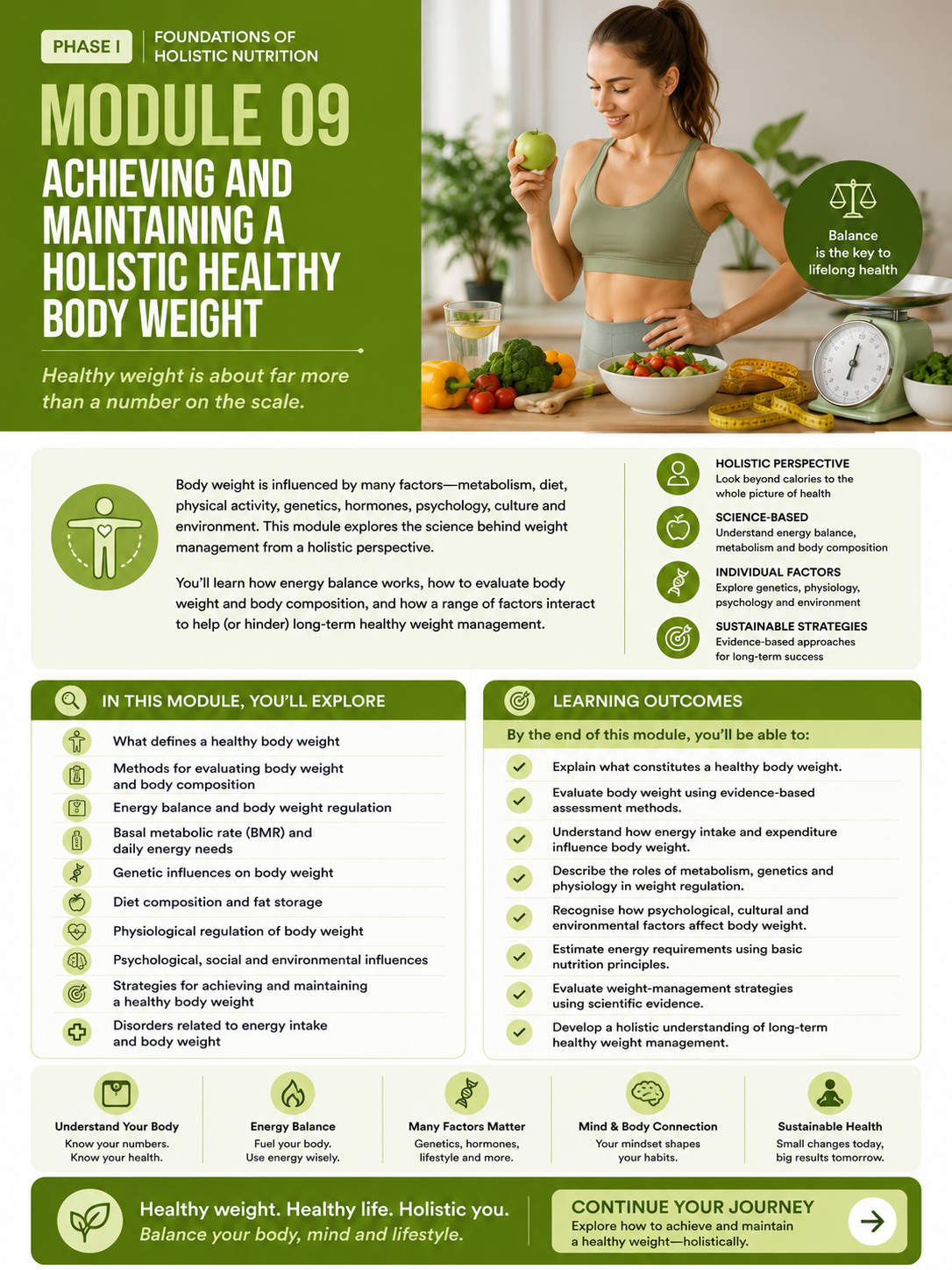
Module 09: Achieving and Maintaining a Holistic Healthy Body Weight — English course overview
View full-size Module 09 image (opens in a new tab)

Module 09

Achieving and Maintaining a Holistic Healthy Body Weight

After trying different weight-loss methods, what can understanding weight regulation add?

You may have counted calories, reduced carbohydrates or changed your diet to follow a popular approach. Yet work schedules, eating habits and activity keep changing, making a fixed set of rules difficult to maintain. A useful next step is to understand the framework behind body weight regulation.

Begin with energy balance and explore how metabolism, dietary composition, physical activity, genetics, hormones and psychological factors interact. Learn why weight-management discussions need to consider physiology, behaviour and individual circumstances together.

Bring social and environmental influences into the analysis, and evaluate the evidence and assumptions behind common weight-loss recommendations. When a plan claims to suit everyone, learn to ask whom it applies to, what it considers and which influences it leaves out.

Develop a more organised way to understand eating and activity choices, with attention to sustainability and overall health. If you regularly encounter weight-loss information, this module provides the foundations for evaluating it and understanding its practical limits.

  • Energy balance
  • Biological influences
  • Behaviour and environment
Explore Module 09
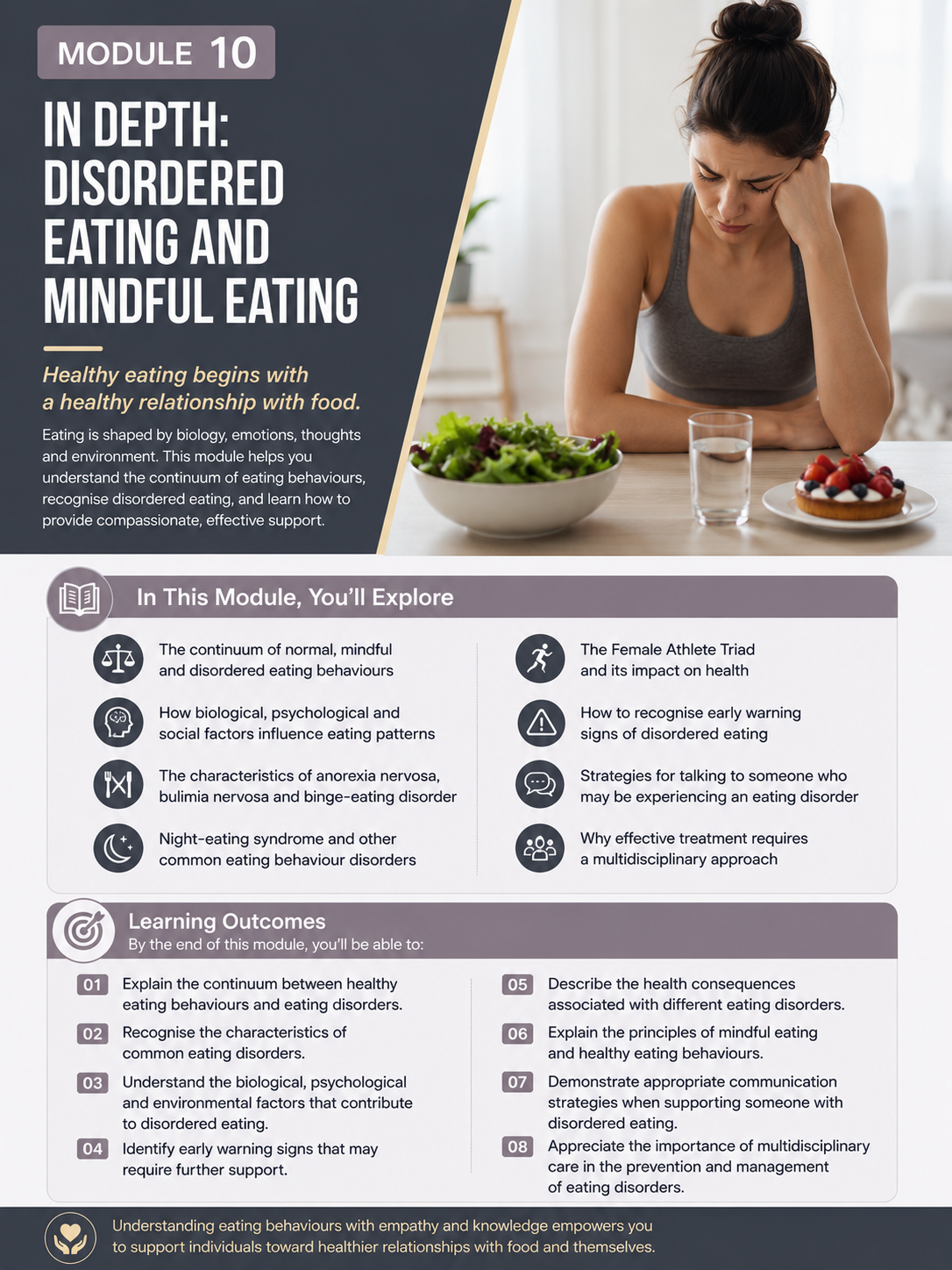
Module 10: In Depth: Disordered Eating and Mindful Eating — English course overview
View full-size Module 10 image (opens in a new tab)

Module 10

In Depth: Disordered Eating and Mindful Eating

How should we understand guilt after eating and repeated cycles of restriction?

Feeling guilty after a shared meal, becoming anxious around certain foods or moving between strict control and episodes of uncontrolled eating raises questions about thoughts, emotions and behaviour. When supporting yourself or someone close to you, advice to “eat less” may leave the underlying experience unexplored.

Examine the biological, psychological and social influences on eating. Distinguish disordered eating behaviours, eating disorders and everyday dietary concerns, and learn about relevant concepts and early warning signs. Develop the language to discuss complex experiences with greater care.

The module introduces the potential harms of restrictive dieting and the principles of mindful eating, alongside the importance of multidisciplinary support for eating disorders. Focus on understanding behaviours, communicating respectfully and recognising when professional support is needed.

Whether you want to examine your own attitudes towards eating or respond more thoughtfully to someone else’s concerns, this module develops understanding, recognition and communication skills. It provides a knowledge base for identifying appropriate support.

  • Eating behaviours
  • Early warning signs
  • Mindful eating
Explore Module 10
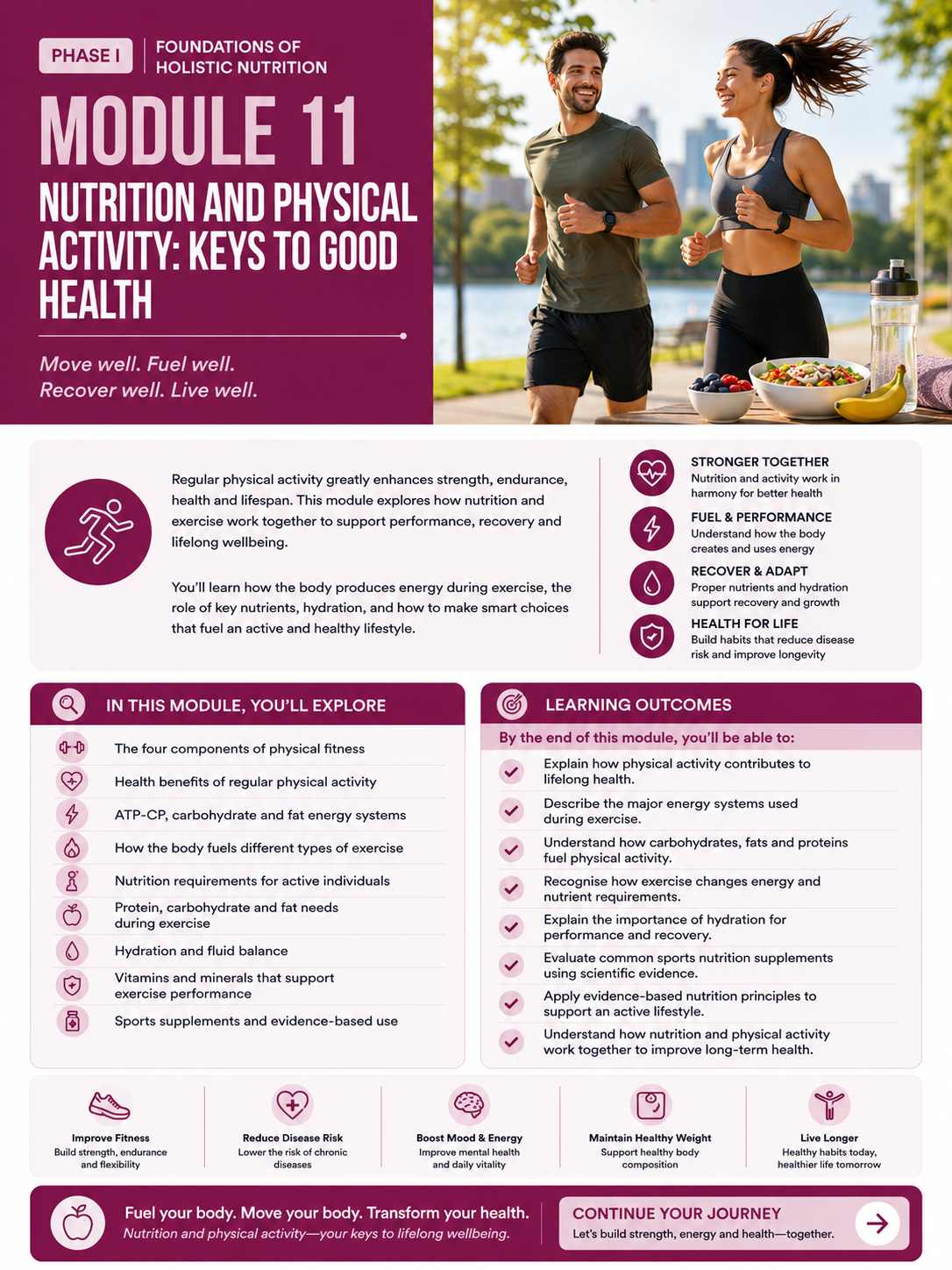
Module 11: Nutrition and Physical Activity: Keys to Good Health — English course overview
View full-size Module 11 image (opens in a new tab)

Module 11

Nutrition and Physical Activity: Keys to Good Health

Once you start exercising, how do you assess food and supplement recommendations?

“Eat carbohydrates before exercise”, “have a protein shake afterwards” and “drink a sports drink when you sweat” are familiar messages. Brisk walking, distance exercise and strength training involve different situations. Before adopting a recommendation, it helps to understand how the body supplies energy for activity.

Explore energy production during exercise and how activity changes the use of carbohydrates, fats and proteins. Connect nutrition with performance, physical adaptation and recovery to understand the physiological reasoning behind different recommendations.

Examine how energy and nutrient requirements change as activity increases, and assess hydration, sports nutrition and commonly used supplements through scientific evidence. Learn to clarify the activity, individual needs and assumptions involved.

If you are building an exercise routine or comparing sports nutrition products, this module helps you ask more specific questions. Develop a stronger basis for understanding how eating and activity fit together and when a recommendation applies.

  • Exercise energy systems
  • Hydration
  • Recovery and supplements
Explore Module 11
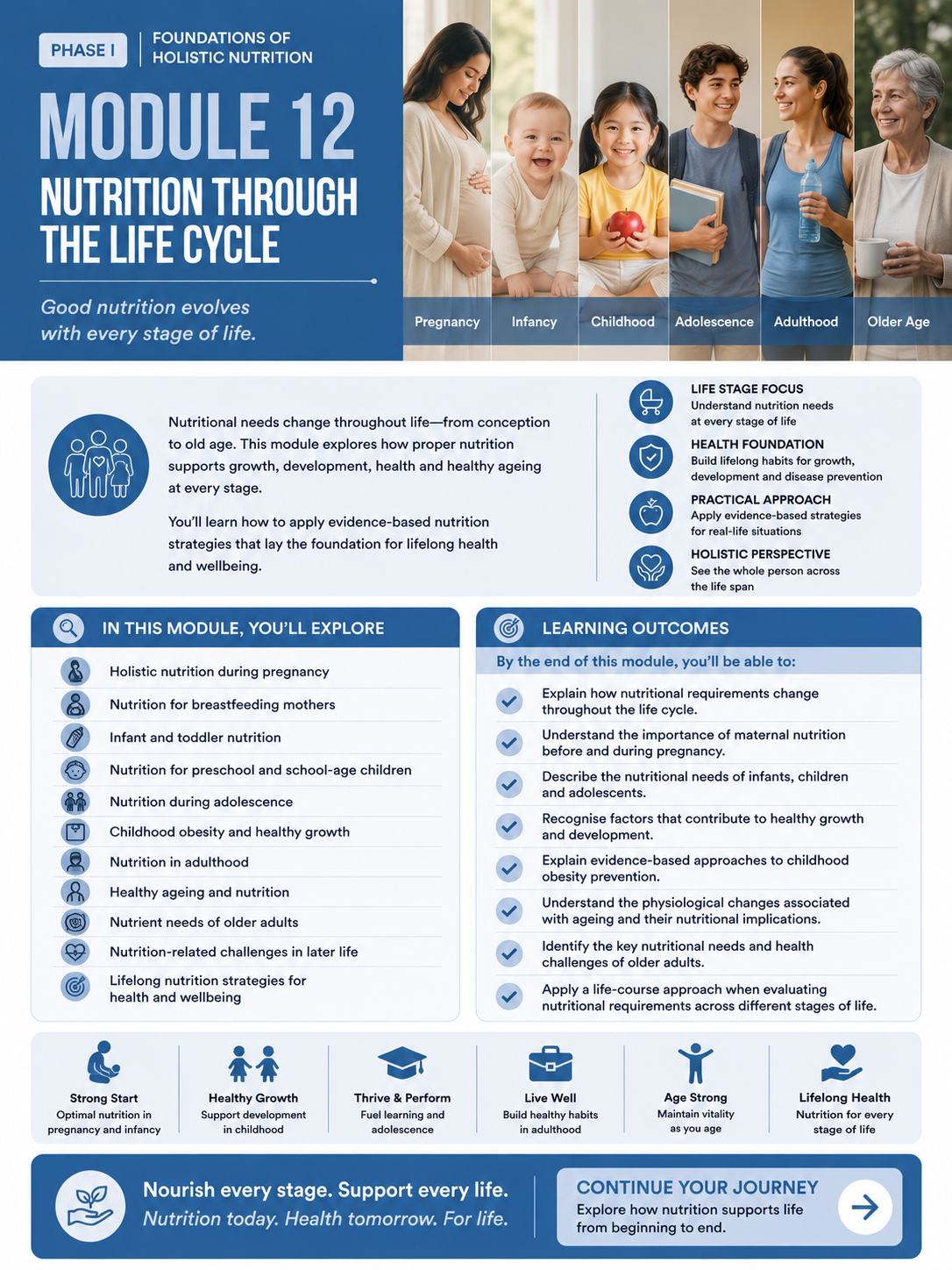
Module 12: Nutrition Through the Life Cycle — English course overview
View full-size Module 12 image (opens in a new tab)

Module 12

Nutrition Through the Life Cycle

Why can family members sharing one meal have different nutritional priorities?

Your household may include someone planning a pregnancy, a growing child and an older relative concerned about diet and muscle health. A shared meal must accommodate different life stages, and one fixed “healthy menu” cannot answer every question. A life-cycle perspective gives family nutrition a clearer structure.

Follow nutritional needs from conception and pregnancy through infancy, childhood, adolescence, adulthood and older age. Explore how growth, development, hormones, physiology and ageing change the priorities within nutrition discussions.

Examine maternal nutrition and infant development, nutritional challenges in childhood and adolescence, and approaches to healthy ageing and preserving muscle mass. Bring together your earlier study of digestion, nutrients, metabolism and behaviour in life-stage contexts.

Develop a clearer understanding of why family members need different nutritional considerations. When choosing foods, reading recommendations or consulting a professional, learn to ask questions appropriate to the life stage. This final module integrates Phase I into a connected framework.

  • Pregnancy and infancy
  • Growth and development
  • Healthy ageing
Explore Module 12

Learning outcomes

Connect the concepts.
Strengthen your reasoning.

Phase I is designed to develop an integrated understanding of nutrition, linking the mechanisms inside the body with the context in which people eat and live.

  1. Explain how digestion, absorption and nutrient transport connect food with its functions in the body.
  2. Describe how macronutrients, micronutrients, enzymes and hormones interact in metabolism.
  3. Evaluate dietary patterns and common nutrition claims using scientific principles and evidence.
  4. Recognise how physiology, behaviour, activity and life stage shape individual nutritional needs.

Your next step

Explore the course in more detail.

Visit individual module pages for course details. For questions about Phase I or further study in the Holistic Nutrition Training Program, contact LOLU Health.

Enquire about Phase I

Return to the curriculum